
ColorMapper
Visualizing Hidden Functions in Spatial Design Practice
Personal Project
Challenge behind Architectural Practices
Navigating the Complexity of Translating Functional Needs into Spatial Forms through Iterative Prototyping
Rooted in a modernist legacy that prioritizes clarity, control, and functional efficiency, architectural practice continues to rely on representational methods — such as sketches, CAD drawings, and physical models — that separate spatial form from functional logic. Through my academic projects and professional internship, I observed a recurring pattern: even as tools become more precise, designers keep switching between spatial imagination and functional reasoning, resulting in a considerable cognitive load.
This divide becomes most apparent during early-stage collaboration. Repetitive tasks slow down iteration, while frequent misinterpretations demand extensive verbal clarification. Traditional CAD models ensure technical accuracy but are often too rigid for exploratory discussion. Physical models provide intuition but lack real-time feedback. Consequently, even intuitive design methods can generate friction in team communication, prolong decision-making, and complicate coordination.
Rooted in a modernist legacy that prioritizes clarity, control, and functional efficiency, architectural practice continues to rely on representational methods — such as sketches, CAD drawings, and physical models — that separate spatial form from functional logic. Through my academic projects and professional internship, I observed a recurring pattern: even as tools become more precise, designers keep switching between spatial imagination and functional reasoning, resulting in a considerable cognitive load.
This divide becomes most apparent during early-stage collaboration. Repetitive tasks slow down iteration, while frequent misinterpretations demand extensive verbal clarification. Traditional CAD models ensure technical accuracy but are often too rigid for exploratory discussion. Physical models provide intuition but lack real-time feedback. Consequently, even intuitive design methods can generate friction in team communication, prolong decision-making, and complicate coordination.

Design Progression: From Functional Sketches and Models to Final Designs
Early-stage explorations and final outcomes from my architectural study projects.
-
As design tools become more precise, the real challenge lies not in accuracy but in how architects think and represent space.
Research Question & Method
How Are Iterative Ideas Explored, and Where Do Cognitive and Collaborative Challenges Arise in Early Architectural Design?
Through both academic projects and internship experience, I conducted practice-based research to observe how early-stage design decisions evolve and where inefficiencies often arise.
Research Finding
Early-Stage Architectural Design: Translating Constraints into Spatial Representations through Validation
Architectural design is a complex, collaborative process involving multiple stakeholders. At the early stage, ideas are iteratively expanded, converged, and refined around multiple constraints. The diagram below shows these behaviors and information flows, highlighting systemic challenges during the Validate Design phase, where misalignment between constraints and diagrammatic translation can trap the process in repetitive cycles.

-
The inefficiency of early architectural design stems from a cognitive gap between spatial representation and functional logic.
Design Opportunity
How Might We Enable Intuitive, Collaborative Layout Exploration via a Shared Tool Bridging Function and Space?
Ideation I
Modular-Unit Functional Prototyping: Enabling Early Exploration of Design Possibilities but Revealing Spatial and Data Limitations

This exploratory prototype used transparent cube units with magnetic connectors to assemble functional modules in 3D space. Each unit contained an internal LED indicating its function by color and transmitted its functional code and relative position to generate a digital twin for further refinement. Full 3D manipulation was affected by gravity, introducing stability constraints that required structural integration. The tree data structure proved inefficient, and the large number of specialized units significantly increased costs for larger projects.

Information Architecture of Ideation I (Tree Structure)
Ideation II
Layered-Unit Functional Prototyping: Expanding Early Exploration of Design Possibilities and Streamlining Data Workflow

The improved approach arranged functional blocks layer by layer to represent spatial levels. Each block’s position and function was recorded, enabling efficient data capture and transfer. Working in layers instead of full 3D reduced physical constraints, expanded design possibilities, and simplified the previous tree structure into a layered, matrix structure. This approach aligns with common architectural thinking, as movement is mainly horizontal — akin to standard floors. OpenCV color recognition identified block functions and positions, eliminating the need for custom units and reducing costs.
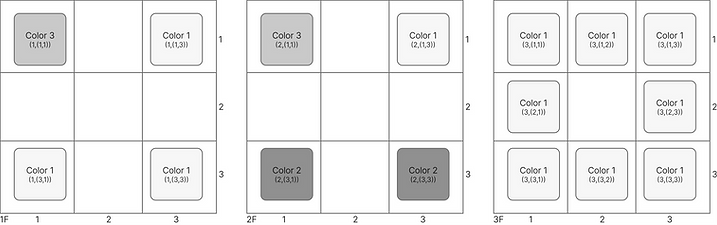
Information Architecture of Ideation II (Matrix Structure)
Working Process
Prototyping with OpenCV Color-Recognition, Digital Modeling, and System Integration to Refine Spatial–Functional Relationships
0. Concept Concretization
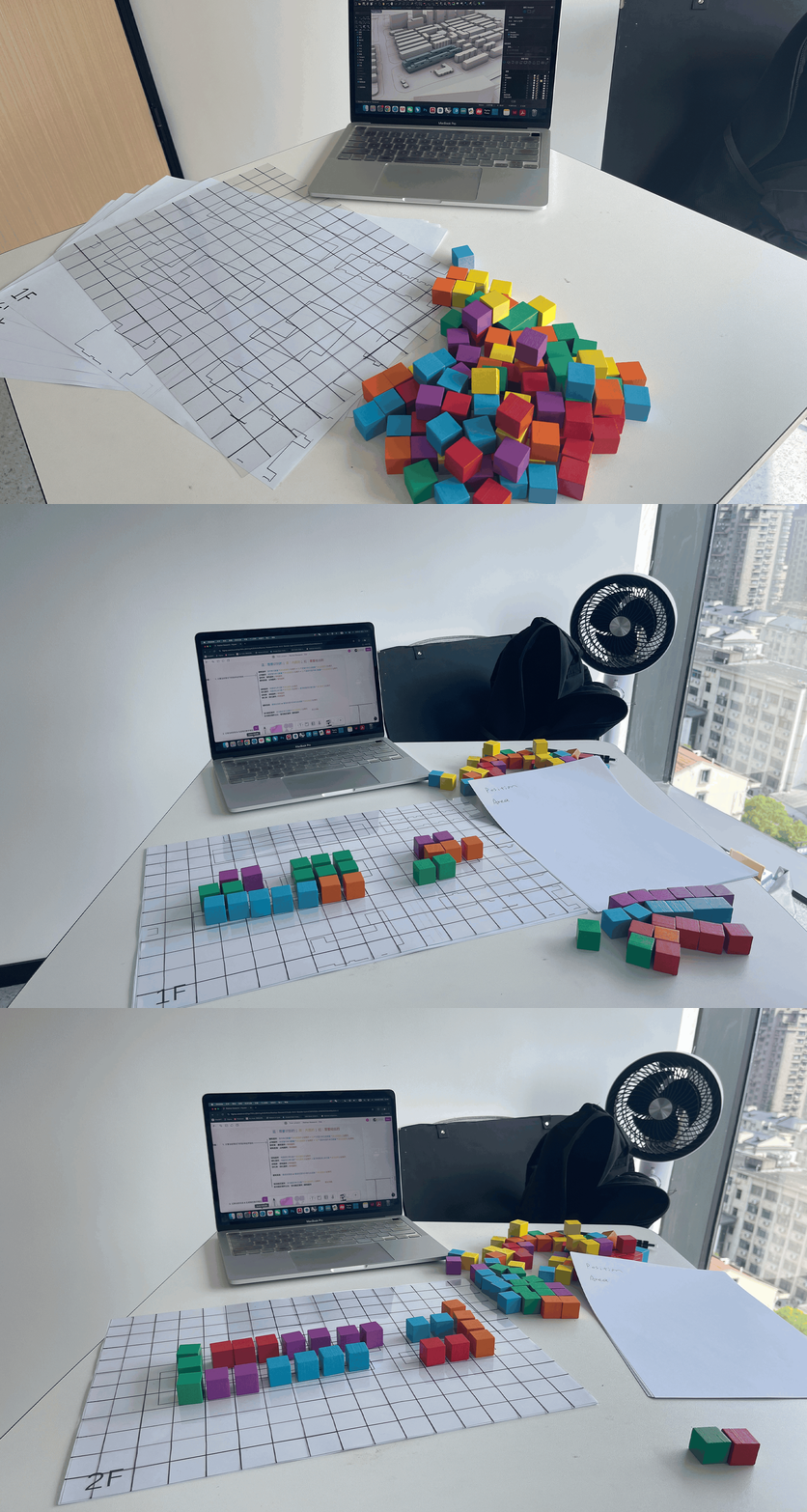
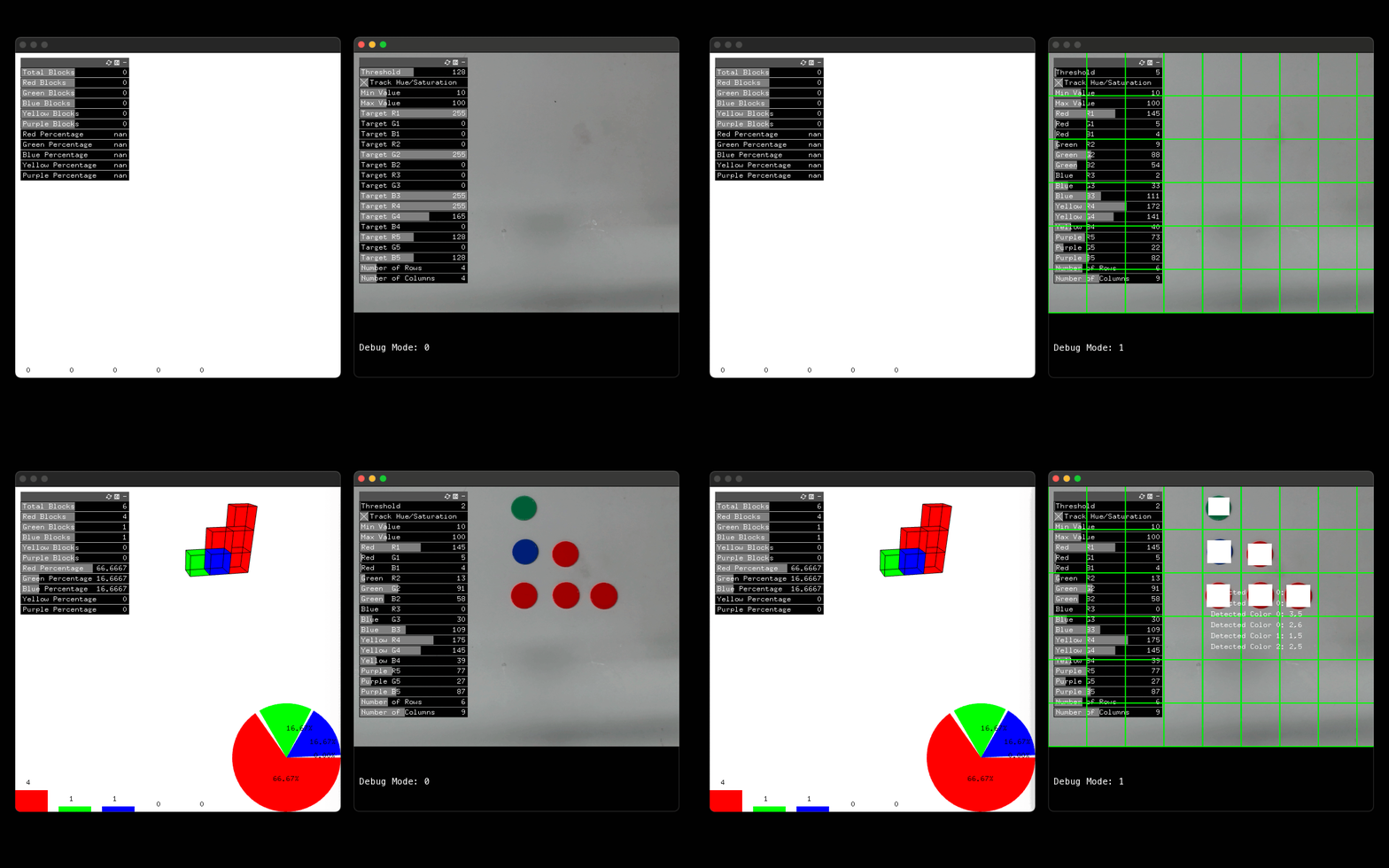
1. OpenCV Color-recognition Exploration
Single-Color Block Recognition
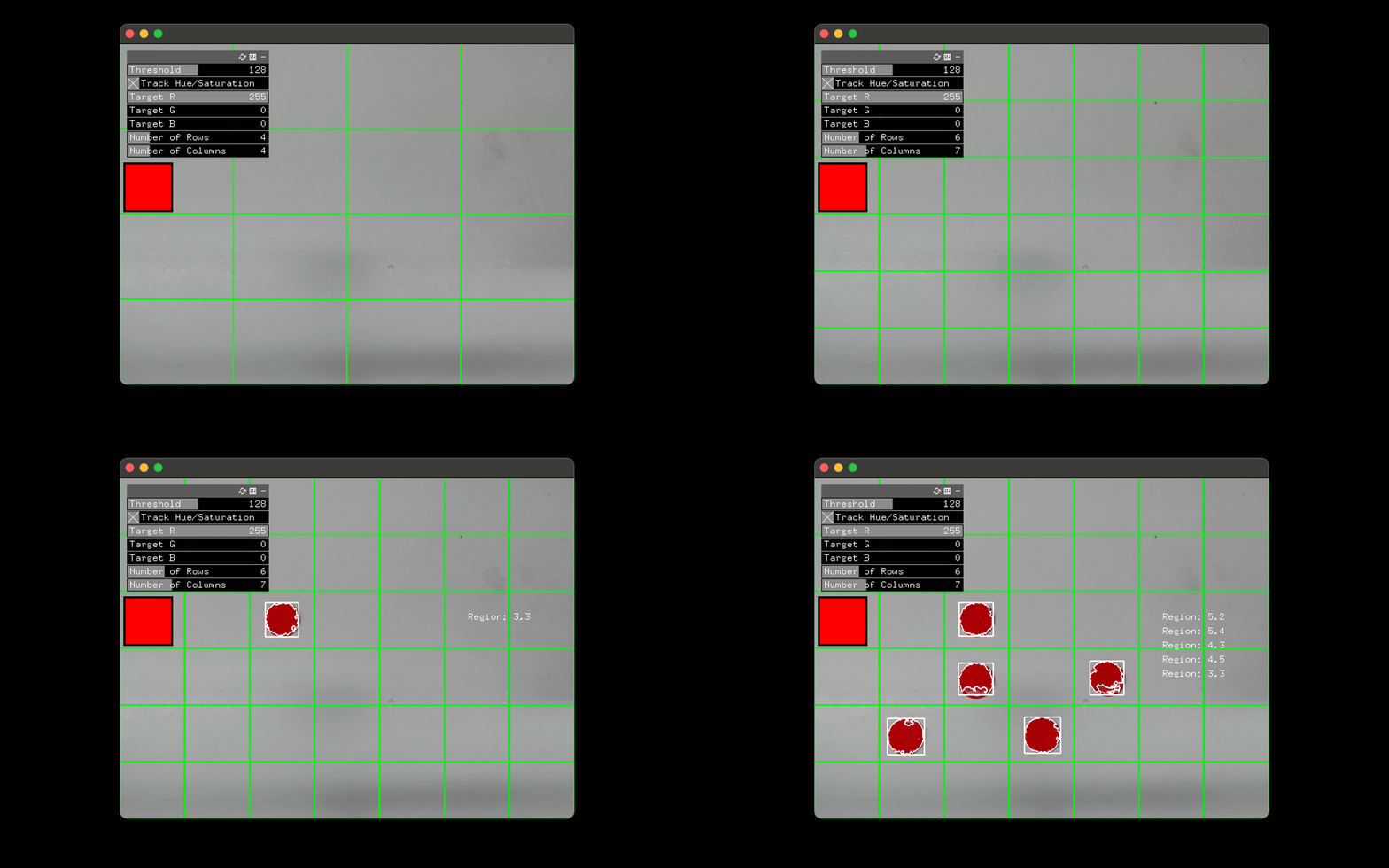
Multi-Color Block Recognition

2. Digital Model Construction
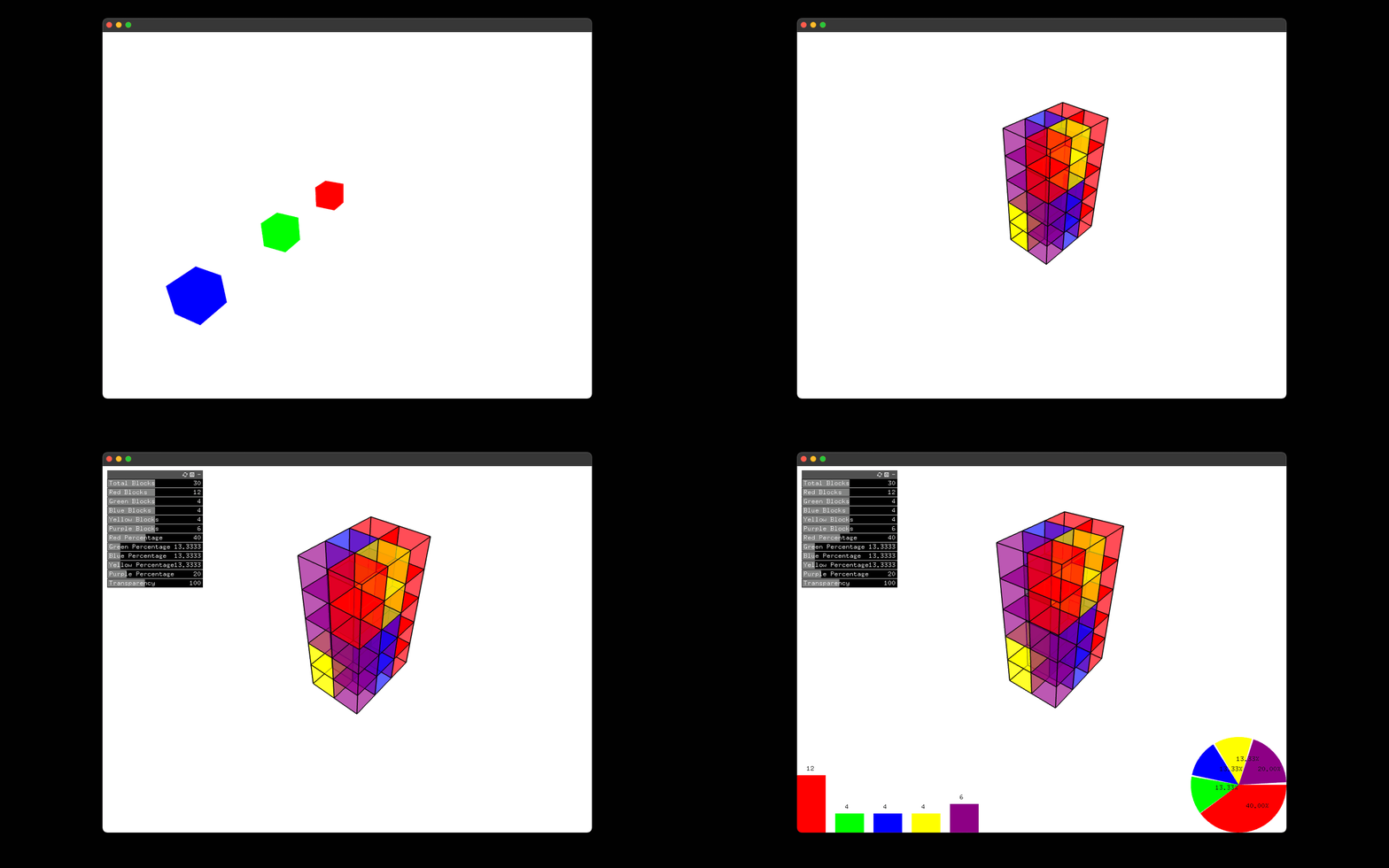
3. System Integration
Independent Multi-Window Operation
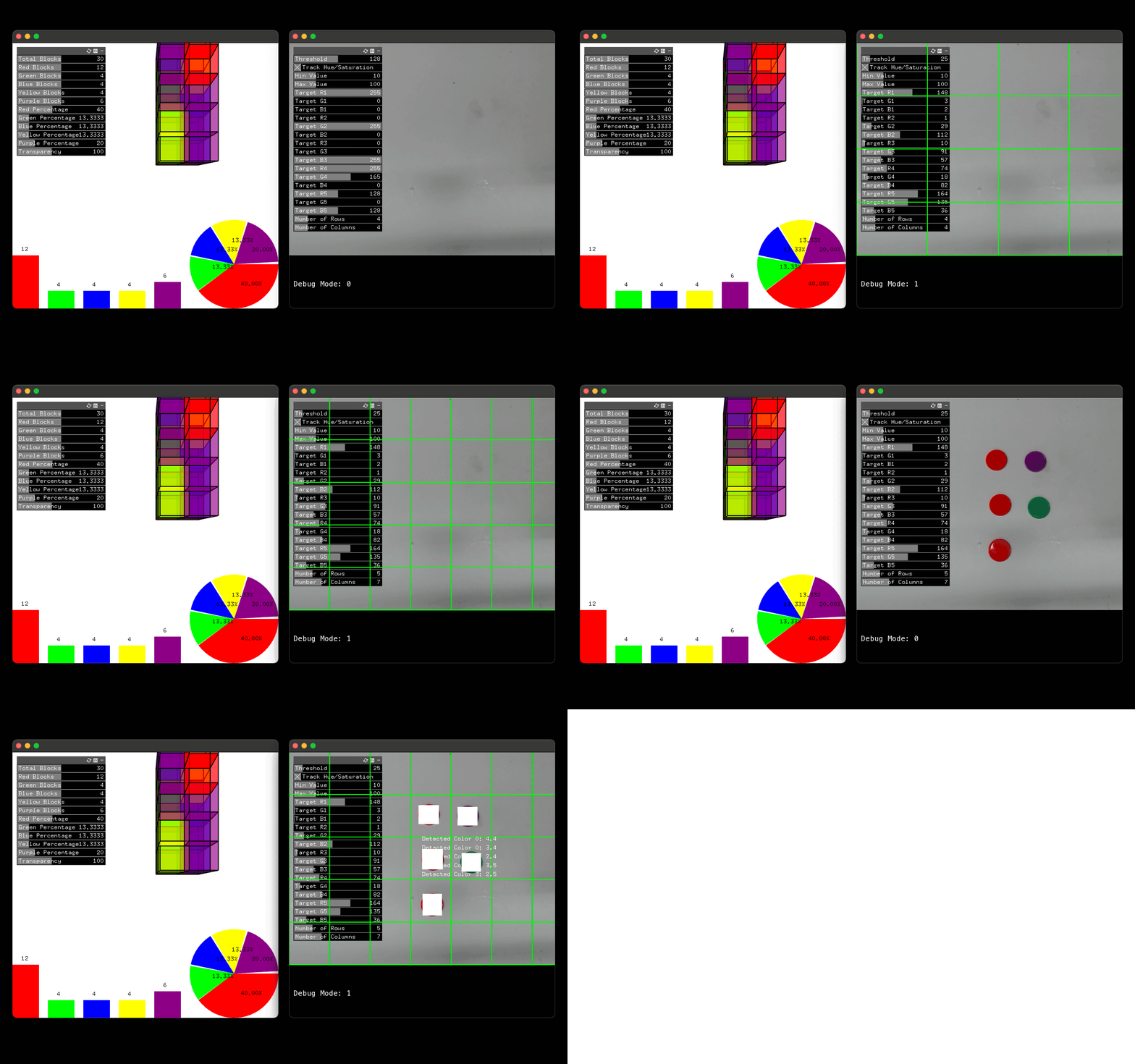
Design Saved as Single Scheme

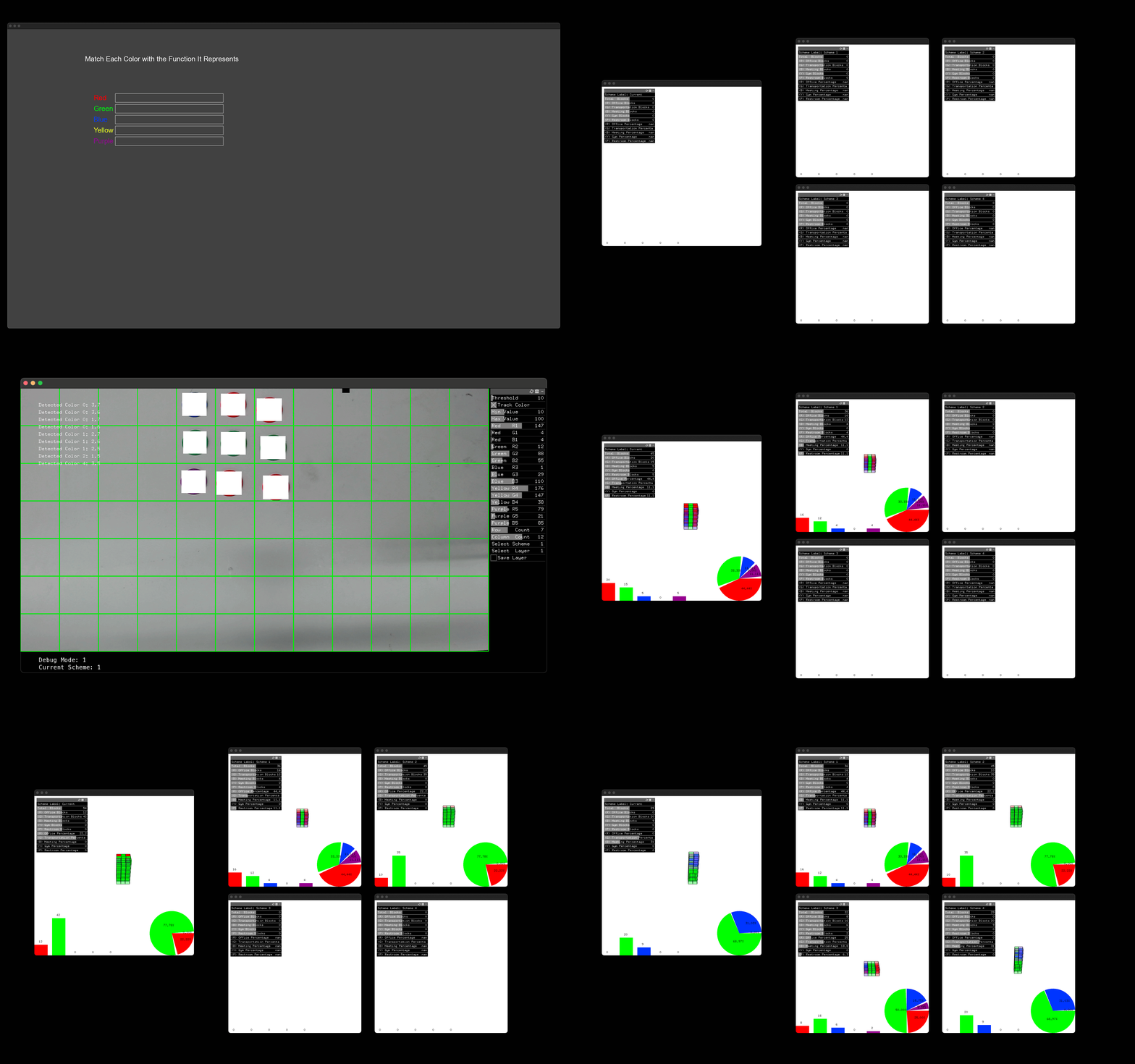
Coordinated Multi-Window Operation
Design Saved as Multiple Schemes
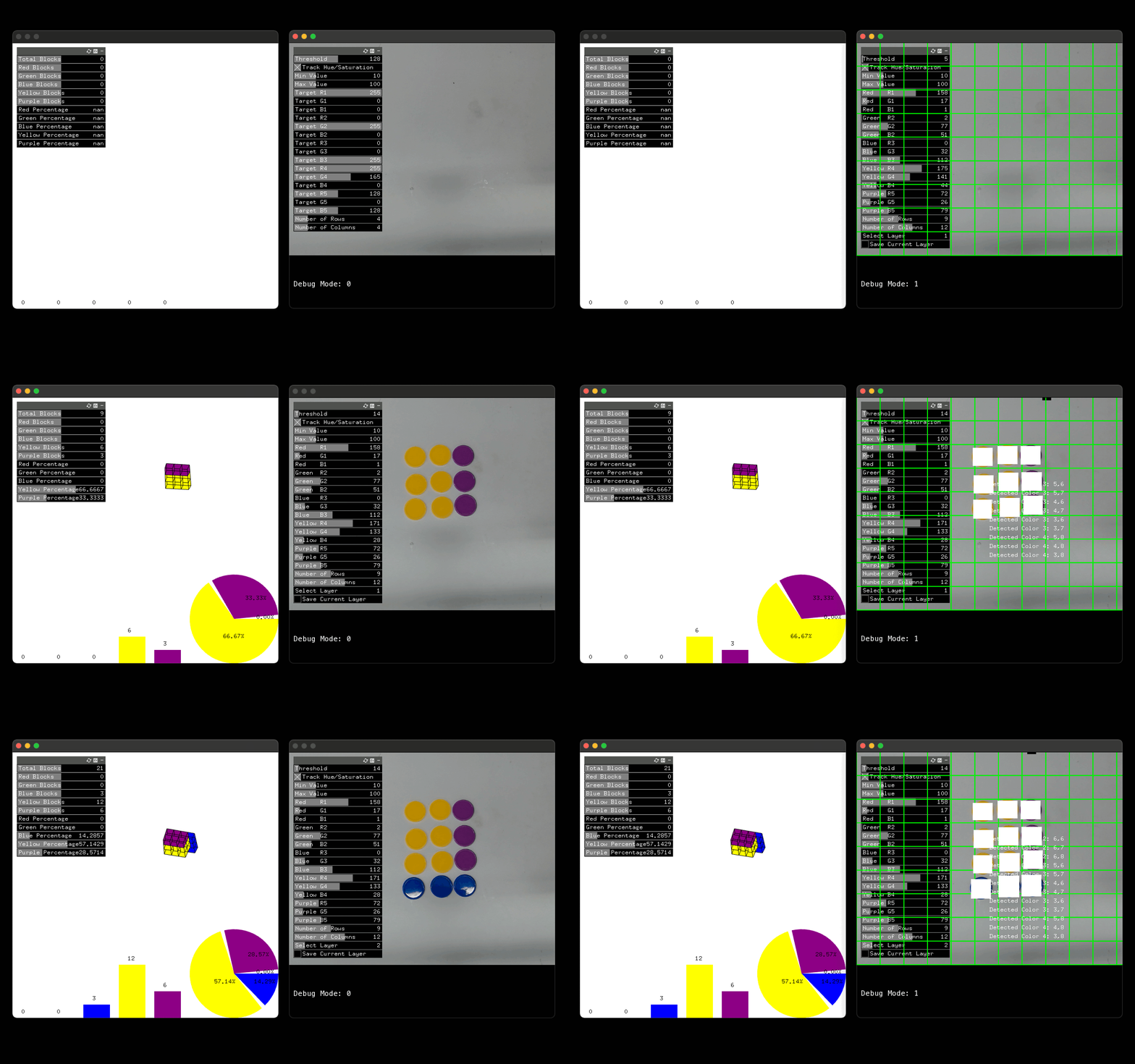
Enable Multi-Layer Layout
-
Color sheets replaced the original blocks during prototyping. Their reduced height minimized perspective distortion and shadows, resulting in more accurate top-down color recognition.
Prototype Demonstration
Design through Arranging Color Sheets and Exploring Alternatives via Integrated Data Visualization
Turn up the volume for a better experience
Future Work
From Technical Feasibility to User-Focused, Context-Driven Design
